Show Notes
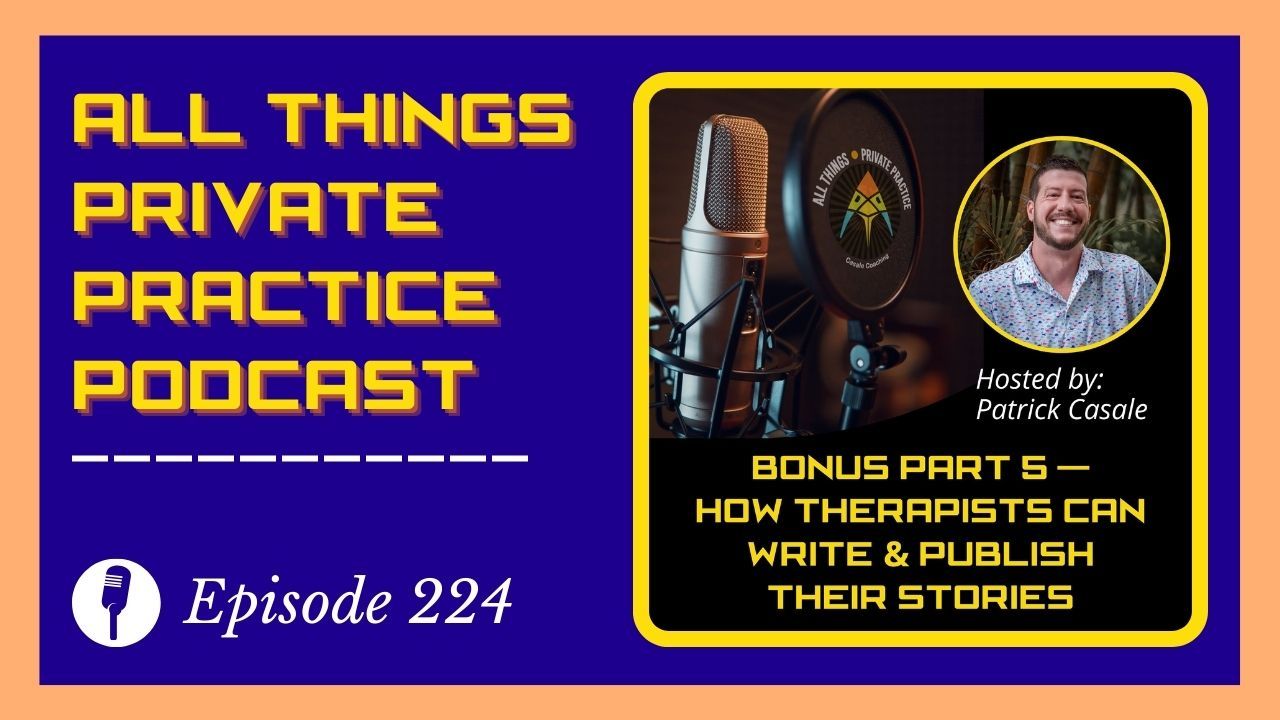
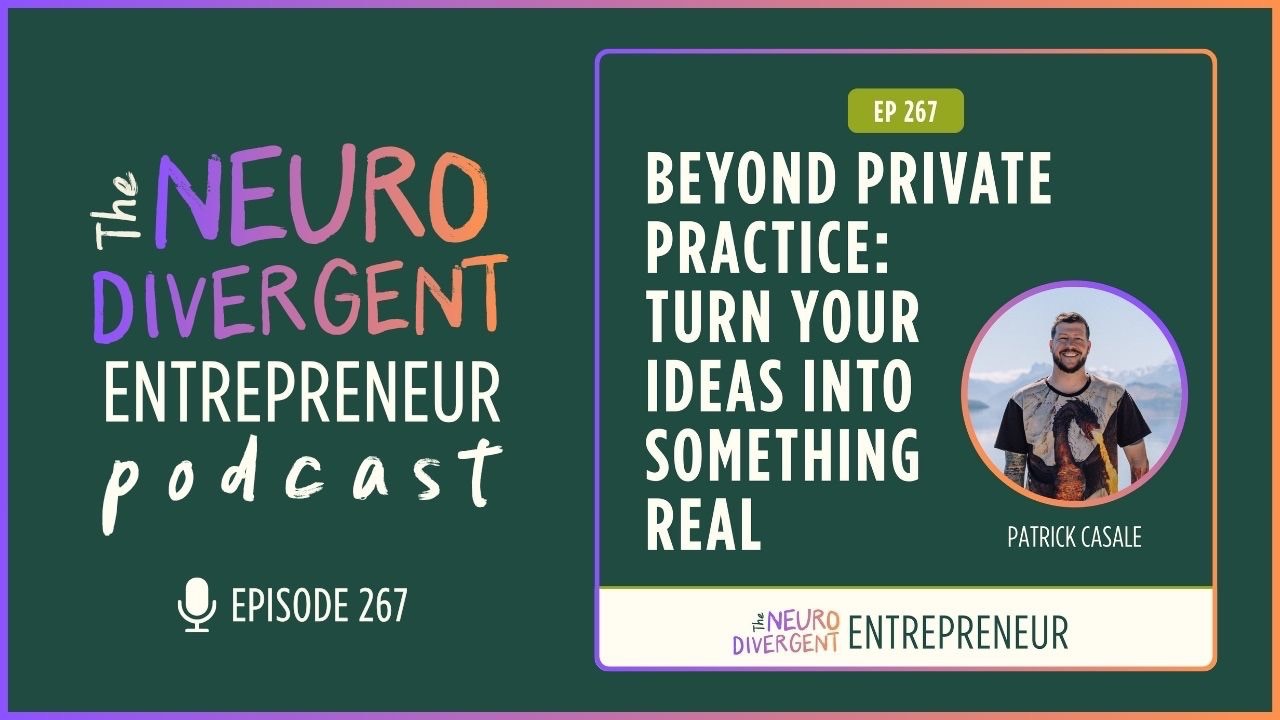
In this episode, Patrick shares his personal journey with writing, highlighting the challenges of self-doubt, imposter syndrome, and the realities behind both self-publishing and traditional publishing. Whether you’re a therapist looking to expand alternative income streams or someone thinking about sharing your story, this episode is packed with insights.
3 Key Takeaways:
- Every Story Has Value: Patrick encourages putting book ideas on paper, reminding listeners that self-doubt is normal but should never stop you from starting.
- Different Paths to Publishing: From self-published workbooks and manuals to scoring a major book deal, there’s no single right route—just the one that’s best for your goals, skills, and audience.
- Start Small and Refine: Commit to writing regularly, even if it’s just 15 minutes or a single sentence a day. You’ll rarely stop at one sentence, and the process of refining your work is continuous.
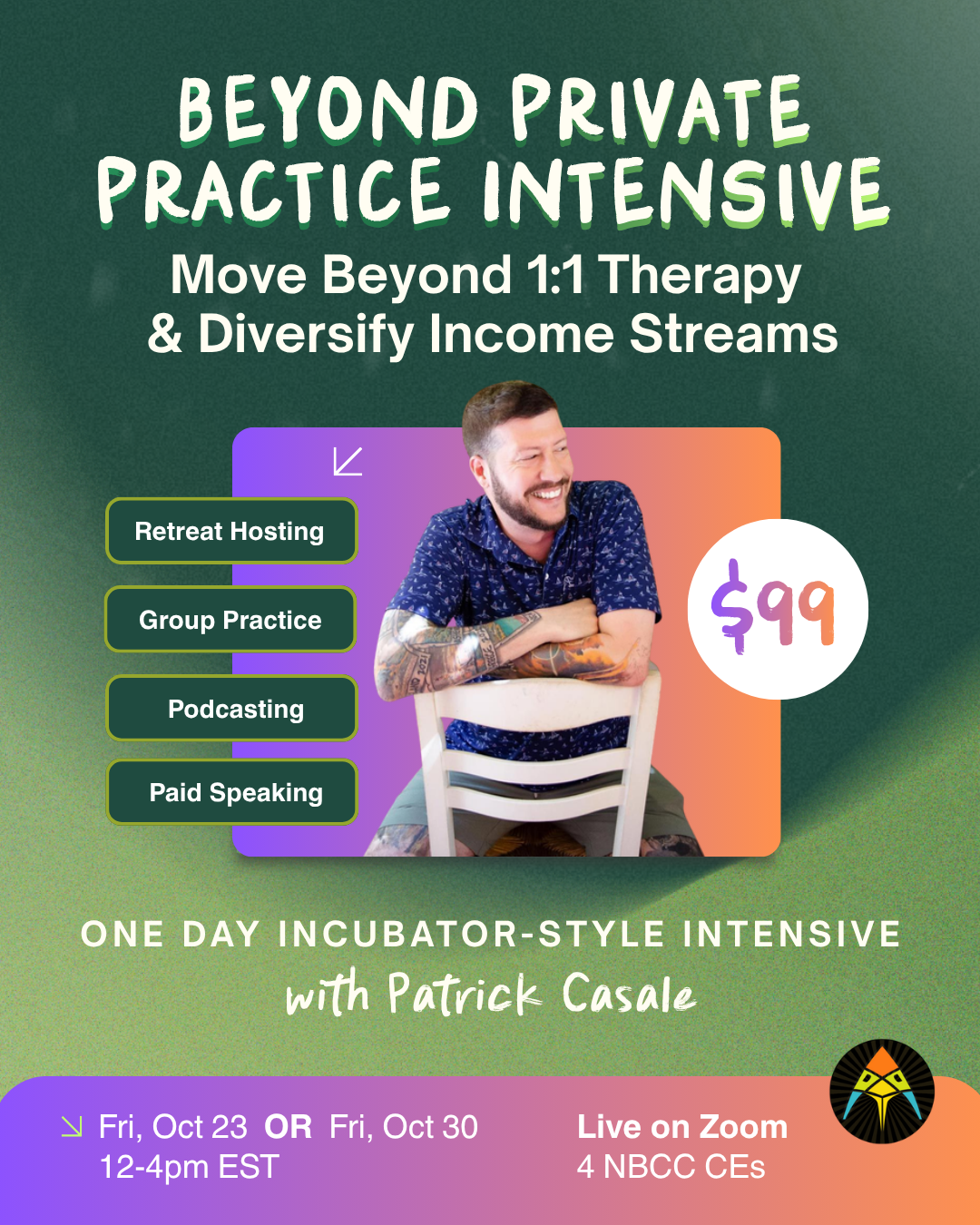
If you’re looking to step beyond traditional therapy, recession-proof your business, and want to learn more about diversifying income through retreat hosting, podcasting, and writing books, check out the Beyond Private Practice: Recession Proofing Intensive on December 12, 2025. Learn more: allthingspractice.com/beyond-recession-intensive
🎙️Listen to more episodes of The Neurodivergent Entrepreneur Podcast
🎙️Spotify
🎙️Apple
🎙️YouTube Music
▶️ YouTube
✈️ Check out available Retreats
🗨️ Join the free Empowered Escape FB Community
A Thanks to Our Sponsors: The Receptionist for iPad!
I want to thank The Receptionist for iPad for sponsoring this episode.
The Receptionist for iPad is a HIPAA-ready digital check-in system that eliminates the need to walk back and forth from your office to the waiting room to see if your next appointment has arrived. Clients or patients can check in for their appointments, and you'll be immediately notified by text, email, or your preferred channel. Break free from interruptions and make the most of your time, because it is valuable. Start a free 14-day trial of the Receptionist for iPad by going to thereceptionist.com/privatepractice. Make sure to start your trial with that link to get your first month free if you decide to sign up.
Free Gifts for Our Listeners
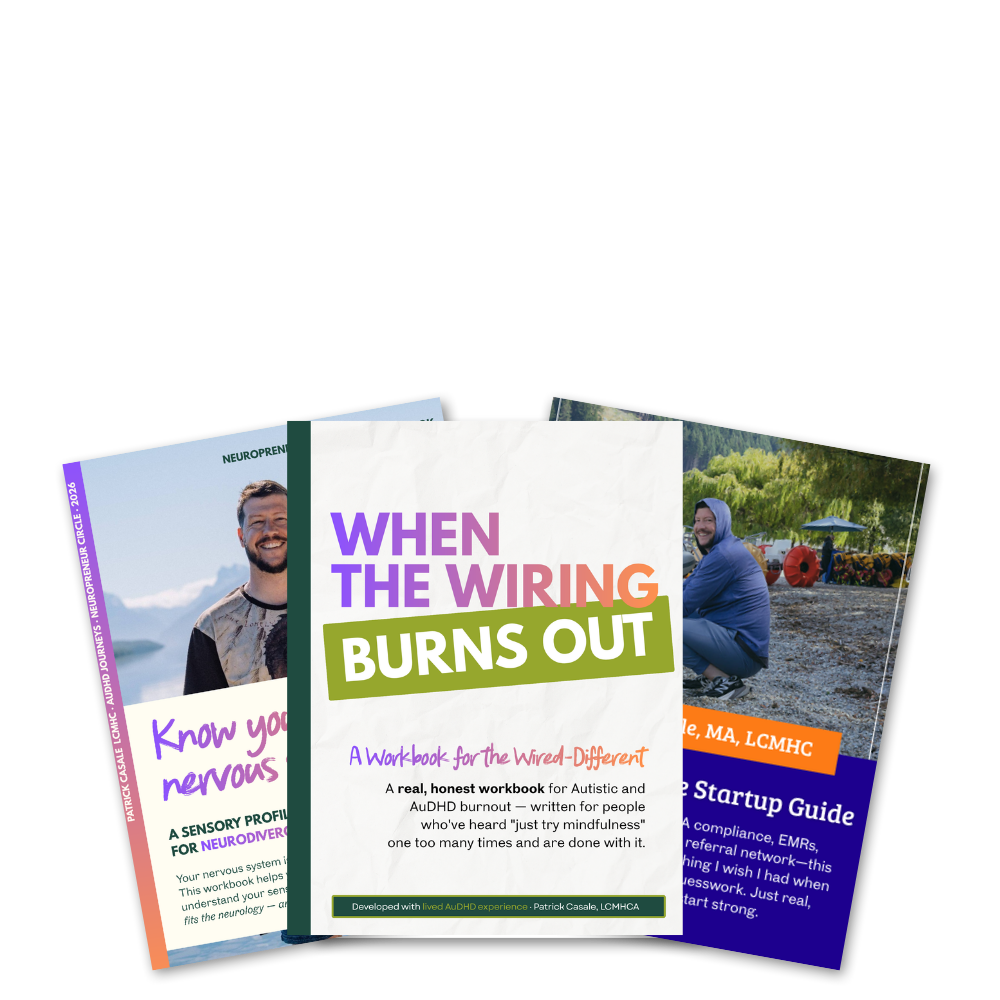
Get a practical podcasting workbook for therapists considering starting a podcast, created by Patrick Casale, host of the podcasts The Neurodivergent Entrepreneur and Divergent Conversations.
You'll get a practical structure for therapists who want to start a podcast but don’t want to rush, perform, or build something they can’t sustain.
Grab your free copy: ndpod.org/Free-Podcasting-Workbook
✨ Move Beyond Private Practice As A Neurodivergent Entrepreneur
Move Beyond Private Practice As A Neurodivergent Entrepreneur is a FREE 5-part mini-course designed for therapists who want sustainable financial independence beyond one-on-one work.
Access your free mini-course here: ndpod.org/Neurodivergent-Entrepreneur
Transcript
PATRICK CASALE: Hey, everyone. Welcome back to the All Things Private Practice podcast, doing another series or another episode on Beyond Private Practice: Recession Proofing Intensive. Words are hard because this is my fourth one I've just done in a row. And my voice is starting to wane a little bit, if you can't tell.
Okay, let's dive in. So, if you've been following along, I've taken you on the journey of why this intensive was created, my thoughts and forecasts of the future of the private practice and group practice landscape. We've talked about how to podcast, we've talked about retreats, and now today, we are talking about book writing.
And again, like you've heard me say, I think they're all symbiotic. They're all, like, aligned to kind of weave very nicely together. And that's why I focused on these three topics for the intensive. Because I was like, "Oh, I could talk about all the things I've done, coaching, programs, courses, retreats, podcasts, speaking opportunities, blah, blah, blah, blah, blah, blah blah." However, it would feel a bit disjointed. And I don't have the time to really deep dive those things in one five-hour setting.
So, we are going to focus on again, podcasting, retreats, book writing. If we get to speaking opportunities, that will just be a bonus and an extra. And I think that speaking opportunities do come from all of those things, because you're leveraging, you're getting out there in front of people, you're setting yourself up to be the expert, you're creating that know, like, and trust. And I think that's important for any of these alternative income streams.
If you're worried about, like, I want to do therapy, but I want to do more, I'm really scared or stressed on how to do that. I don't know how to start. I don't think anybody's going to pay attention. Is my story really valuable? I just want you to pump the brakes and just like take a second to think about those questions.
I know we are really critical of ourselves. And I know as therapists, for the most part, we don't always practice what we preach. We're much better at giving other people advice. We are so hard on ourselves. A lot of us are very perfectionistic, high-achieving, never good enough, blah, blah, blah, blah, blah. Trust me, been there, done that. I get it.
However, when it comes to writing your books, a lot of you are wanting to do this, whether it be workbooks, whether it be self-publishing on whatever topic, whether you want to pursue the traditional publishing route, there is an opportunity and an avenue. I'm going to lay it out in a way that makes sense.
If you want to go down the workbook route and self-publish, I do think that's a low lift. I'm not saying it's not a lot of energy. I'm not saying it's not a lot of effort. But I do think it's like the most accessible route. And it really does create a presence.
I have a lot of friends who have workbooks out that they've self-published, and they bring them to trainings, and conferences, and they sell them on their social media or on their website. It becomes a great revenue stream. It also creates some reputability.
I've published a book, right? Like, actually, as I'm sitting here, I realized I've co-published a 72-page retreat planning manual. You can find it on my website. It's a roadmap and retreat planning manual. Anyway, I've done that. And people buy it. And it's now an evergreen income source. People land on my website. They can just purchase it via the link. They get it through email as a downloadable link.
But if we want to move beyond self-publishing and workbook, and you want to move towards like self-publishing something that you really want to get out there that might be a training manual, you want it to be a how to guide, you want it to be some sort of self-help book, you want it to be fiction, you want it to be very specific to a certain topic. We're going to start working on how to get started. This is not going to be a training for like, here are all the steps on how to self-publish. There are lots of people who do that out there. And I can direct you towards some of them, but that's not what this is going to be about.
Our time being spent, that I want to talk to you about in the intensive on December 12, is how to get started on writing your story. So, as I sit here today in mid-November, I am very fortunate to have been the recipient of a book contract with a big five publishing company. I actually signed a book deal last March, right before I went to my Ireland retreat with Balance. Balance is an imprint of Hachette publishing on a book that I wrote about late in life autism discovery, because I realized for myself and for so many other people who are diagnosed later in life, like, okay, you get this diagnosis, or you discover it on your own, or, as my good friend Dr. Megan Neff would say, maybe you've come to it through self-identification, now what? Like, what do I do with this information?
Because I think for a lot of us, discovering later in life, and not all of us, I don't want to say one size fits all, because in the autism world that is not the case. But I think for a lot of people who discover later on, it's because they've been seeking out the why. It's a lot of identity work of like, I don't understand myself, or my relationships, or I'm really struggling to relate to A, B, and C. I've tried all of these avenues. Nothing has made sense. Finally, I arrive at this answer, you're autistic.
I learned this at 35. I'm now 39. And I was like, "I don't know what to do now." I'm still the same person, right? But it's this new lens that you're viewing the world from. I wanted to write this book two years ago. I don't think I was ready. I don't think I had, like, learned enough about what it meant to be autistic. I think it would have done great disservice. I think it would have caused a lot of harm, because I would have used language that I consider to be harmful or discriminatory, even. I had to go through it, right? I had to unlearn a lot. I had to learn a lot. There's still so much I don't know about the autistic existence as a 39-year-old autistic ADHDer. There's still a lot that I need to learn more about, that I'm confused about sometimes. Sometimes I think I know something, and I hear a different perspective, and I'm like, "Huh, how am I going to incorporate all this into this book?" So, I'm working on that. It will be published March of 2027.
So, I know how to go that route. I know how to get your ideas on paper. I know how to help you feel unstuck when it comes to writer's block and to get started. I think that's a huge part of this. I didn't set out writing this book to secure a big five publishing deal. That was not my intention. As so often in my life, my intention was just to get it out into the world. I had sat on it for too long. What happens for me is it like it starts to bubble and simmer, and then it becomes a volcano-esque and explodes, where it's like now it just needs to go.
And what I did back in, I think, it was the summer of 2024, yeah, summer of 2024, because it was before Hurricane Helene. That's how I have everything marked in my brain now, as someone who lives in western North Carolina, sorry to everyone who's gone through it, because I get it. In other parts of the world, too, who have experienced climate disasters, it's fucking horrible. But that's my like gage for time.
And so pre-dating Helene, I was just like monotropic, deep, intense focus. One day, I think it was like a Friday, my wife was out of town. I turned on the First Lord of the Rings movie. And I just started writing. Before I knew it, I had watched all three movies in the background, all 10 and a half hours of them. And I had wrote 60,000 words. I actually wrote so intensely that it felt like my arms were going to fall off, like I couldn't pick my arms up, if you're watching this on YouTube. Like, I couldn't pick my arms up anymore.
And that was just a very first like, rough draft, you know? Like getting all of it out, everything that was in my brain. And then, I didn't know what to do with it. I was like, "Okay, now what?" I always assumed I was going to self-publish it. And I reached out to my good friend, Maureen Herman, who owns Group Practice Exchange. And she self-published her book, The Accountability Equation. And she sent me this, like, Maureen is also an AuDHDer. And she's much more organized than I am. And it was like, this list of like 40 steps. And I was like, "There's no fucking way I'll ever do this. This is way too overwhelming."
And I immediately, like, closed it out. And I was like, "Oh, I don't think I can go that route." So, then, I posted on social media. And I was just like, "I've written this, like, 60,000-word manuscript. I don't know if it's any good, and I'm just wondering if there anyone any people out there who help with self-publishing? Because I don't think my executive functioning can handle the steps in the sequential order that she sent me of like, make the cover art, you know, get the ISBN number, register it here and here and here." I was like, "No." I'm sure if I put all of my effort, and energy, and intention into it, I could figure it out. But as of right now, feels way too overwhelming.
So, I decide I need to figure out if this is even worth reading, right? Because, like, is it just me venting? Is it just me, you know, trying to create this cathartic process. But in reality, what I always wanted it to be was to help people feel less alone. I wanted people who had gone through most of their lives feeling so misunderstood to read this and just be like, "I am not the only one." And I think that's what I've always aimed to do, unknowingly throughout most of my life.
I've always been very vocal on my social media, even before I had an audience about my struggles. People would ask me, "Why are you sharing this? Like, why are you sharing so much of yourself?"
And I always thought to myself like, "Seems like a bizarre question." I've never understood that. I just knew that the pain needed to come out. And I also knew that if I was experiencing this pain, I wasn't the only one.
I also acknowledged simultaneously my privilege of being a cishet white man, and being able to say a lot without having a lot of fearfulness, maybe not in this fucking political climate. But you know what I mean. And that's always been a factor as well, because I'd been misdiagnosed bipolar, OCPD, OCD. Well, I do have OCD, so that's not really a misdiagnosis, major depression, complex PTSD, never autism, never ADHD. And something just wasn't clicking. Something wasn't making sense.
But throughout that journey, and throughout my 10 years of having a gambling addiction, I always posted about it, the vulnerabilities, the rawness, the humanness. I was just trying to help other people know that they are not alone. And I would get DMs of like, "This was so incredibly helpful." Or, "You nailed my experience. You articulated something I could never articulate." Or, "You've said something I could never say out loud."
And for me, that's always been the purpose of my writing, is to not only make myself feel better by getting it out, but to help other people who come across it for those reasons and resonate with it.
I actually started writing a book about my gambling addiction like seven or eight years ago, same process. I wrote like 40,000 words in one sitting. And I've never done anything with it. I might come back to it at some point with a fresh lens and a new perspective. But I was thinking I would self-publish that, about what it's like to go through gambling addiction, and the loneliness, and the highs and lows, and the real fucking lows, let me tell you that. And I probably will circle back to that at some stage of life, but I know that autism and ADHD are kind of first and foremost for me right now.
So, I gave it to a bunch of friends my manuscript, who I trusted to give me honest feedback. Everyone was like blown away by this manuscript about late-in-life autism discovery. And then, I started to think, like, "Are they just being nice to me because they're my friends?" Because, like, how could everyone have positive feedback? That doesn't make sense.
So, then I asked a friend who is in publishing. And she read it. And she responded. She emailed me. She was like, "I want you to know, man, these people are not just being shit weasels and kissing your ass, man. This is good. It needs refinement, but this is good. And you did this in one sitting?" And I was like, "Yeah. I did in like 12 hours."
And then, I started refining it and doing it again and again and again. And eventually, I got a proposal written and sent it out to a bunch of agents. And seven of them were interested in it immediately. And I was like, "Oh shit."
And I interviewed a couple of them, ended up really liking one of them, and signing with him. And I was like, "I have a literary agent." I did everything asked backwards, as I usually do, though, if you've heard me talking about my retreats, or my podcast, or my Facebook group, or my anything. I've always built the plane as I fly it. And I did not know I wasn't supposed to write the manuscript first. That I was supposed to, like, get the agent, then submit the proposal to a bunch of publishers, then deliver on the proposal that you submit by writing the manuscript.
So, my agent arranged all these meetings with all these publishers. And I was so confused. I was like, "Why are we not telling them that we already have 60,000 words written?" He's like, "Because you did everything in an unorthodox way."
So, anyway, fast forward to now, working on the final, like, getting that draft ready, I would say, easily, one of the hardest things and most vulnerable things I've ever done in my entire life. Yeah, you question yourself a lot. I don't want to do any harm to the autistic community. I don't want to misrepresent the autistic community. I also recognize I'm writing from my perspective and my experience. I also know there are going to be a lot of people who read it, and they're like, "That's not my experience." And criticize it. That's horrifying to me.
When I talk about self-doubt on this podcast and imposter syndrome, yeah, this is the most I've ever had. I can't tell you how many times I've wanted to message my agent and be like, "Can we send the advance money back? I don't think I can do this." So, if you're in that boat, you're not alone if you're thinking about starting. I just want to normalize it. And that's what we're going to do in the intensive on Friday, December 12, is we're going to get your story down on paper. We're at least going to write that first paragraph, because that's what matters.
And that is one takeaway that I got from my good friend Michael Ashford from The Receptionist for iPad, who's been a sponsor of this podcast for upcoming on four years now. And he was on the podcast, and he was talking about writing, because he's an author, as well, about committing to just writing 15 minutes a day, or one sentence a day. And the psychology behind it, right? Is like, you're very rarely going to write one sentence and stop. You're actually going to write a substantial amount more than that.
And that's what I encourage you all to start thinking about, is like if you're going to join me for the intensive on the 12th, or whether you just want to start writing your book, just getting started, getting that out, get the idea out on paper. You will refine endlessly, I promise you. Whether you go the self-publishing route or the traditional publishing route, there is going to be a lot of editing and revision, but get the story out. Every one of you has a story to share. Some of you probably have endless stories, multiple stories.
I have so many book ideas. Obviously, the gambling addiction one. I want to write a book about ADHD, and restlessness, and romanticizing like the grass never being green enough, and the ADHD tax, and not feeling comfortable in my own skin. I want to write that book. I want to write the book on doubt yourself, do it anyway, and I will do that even if it's a self-published version. I want to write a book similar to Kitchen Confidential from Anthony Bourdain about the therapy world. Like, there's so many ideas, stick with one. That would be my challenge for you right now.
Open up that Google Doc, or that notebook, or whatever you need to write in. Start writing. You all have a story to tell. And it's worth being told. It's worth being heard. You've all probably read really shitty books, right? The difference between you and that author probably is that they got work through the self-doubt and the imposter syndrome, and they wrote the book anyway.
And some of you might write books, and you might swing and miss. Like you might try to get traditional publishing. And you might get a lot of rejection. We actually got a lot of rejection for my book idea because the proposal wasn't strong enough. So, we had to go back and refine it completely, and redo the proposal entirely. And that was a trial and tribulation in its fucking self. I almost gave up during that process because Hurricane Helene had just happened here. And I was in major trauma mode. I was really dysregulated. And I'm really thankful that I stuck it out.
But some of you might put that out to agents, and you might not get responses, or you might get rejections. Publishers may pass. It happens. It's a part of the process. If you self-publish, you might give up 100 times. And you might continuously show back up and figure out a way to, like, pick yourself up again. That's what I'm going to help you with, is getting started, getting the ideas out, navigating, like, which route do you think I should go?
I absolutely think my audience helped me secure more of an agent/publishing deal, because they want to know that you're going to market it. Even with a traditional publishing route, you do all of the marketing yourself, all of the book launches, all of the navigating book tours, that's all on you. I didn't know that. I just assumed the publisher did everything. We're just kind of here to, like, put our name behind it, give you an advance. I was like, "Fuck, that's horrifying. What if nobody buys it?"
But anyway, that stuff is all normal. I just want to really, like, affirm that. And again, if you've been following this series, the Beyond Private Practice: Recession Proofing Intensive, Friday, December 12th, we are going to go over podcasting, retreat hosting, writing your book, getting started, getting unstuck, obviously, working through self-doubt, and imposter syndrome. That's all going to be a part of it. From 11:00 AM to 4:00 PM Eastern Time, Friday, December 12, $299 four CEs. Make sure to sign up. This is probably the most value-packed thing I've ever done. And I'm doing it before we go into 2026 because we should not go through this alone. The financial insecurity, and stress, and anxiety, and uncertainty of where the future goes from here in the private practice, and group practice, and mental health space. You are not alone to feel any of those things. We're going to do it together. Doubt yourself, do it anyway. Sign up, and I will see you then.
FREE PRIVATE PRACTICE GUIDE
Join the weekly newsletter for private practice tips, podcast updates, special offers, & your free private practice startup guide!
We will not spam you or share your information. You can unsubscribe at any time.





![Episode 269: Neurodivergent-Friendly Spaces Aren’t Built by Accident [featuring Trina Haynes]](https://kajabi-storefronts-production.kajabi-cdn.com/kajabi-storefronts-production/file-uploads/sites/2147507511/images/70d8a83-24dd-42e8-cb48-83a524680760_TNDE_YouTube_episode_269.jpg)
![Episode 266: Healing Isn’t Just in Your Head: Rethinking What Therapy Can Be [featuring LeNaya Crawford]](https://kajabi-storefronts-production.kajabi-cdn.com/kajabi-storefronts-production/file-uploads/sites/2147507511/images/a2d5a4-e4bf-63b0-fa7f-6e6f62c466d5_TNDE_YouTube_episode_266.jpg)