Episode 256
Jul 22, 2026

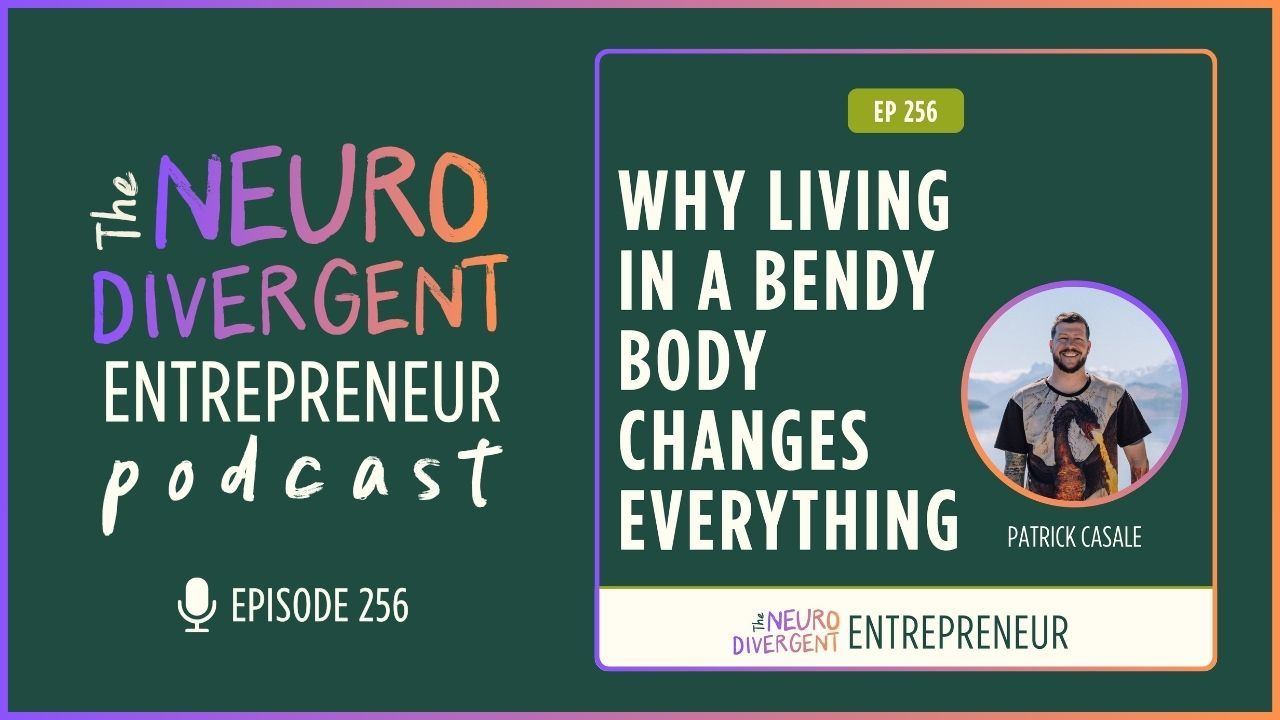
Why Living in a Bendy Body Changes Everything

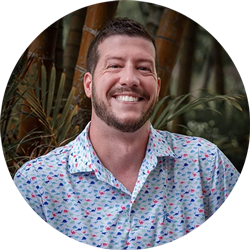
Hosted by: Patrick Casale
The Neurodivergent Entrepreneur Podcast

Show Notes

Living and working with Hypermobile Ehlers-Danlos Syndrome (hEDS), along with comorbid conditions like Mast Cell Activation Syndrome (MCAS) and Postural Orthostatic Tachycardia Syndrome (POTS), means navigating a world that isn’t built for bendy bodies. In this episode, Patrick Casale reflects on his journey from college athlete to entrepreneur with mobility aids, and the realization of how much internalized ableism he's had to unpack—and how critical it is to reshape our understanding of disability in business and life.

A key theme that emerged is the interconnectedness of neurodivergence, chronic illness, and entrepreneurship. Patrick shares not just the physical challenges, but also the societal barriers and systemic gaps in care that affect so many—often leaving individuals to educate their own providers, advocate for their needs, and fight daily just to function, let alone thrive.

3 key takeaways:

  1. Invisible disabilities are real: Many of us lean, brace, or move in ways that are misunderstood as unprofessional or disengaged. In reality, these are survival strategies for managing fatigue, pain, and proprioceptive challenges.
  2. Internalized ableism needs deconstruction: Embracing mobility aids and supports can be emotionally difficult, but reframing them as tools for empowerment—not weakness—makes room for resilience and self-compassion.
  3. Interconnected care is essential: Traditional healthcare silos rarely see the full picture. We need holistic support that bridges neurodivergence, chronic illness, and business realities.

To anyone navigating these parallel roads: you’re not alone, and honoring your body’s needs is not just valid—it’s essential.


🎙️Listen to more episodes of The Neurodivergent Entrepreneur Podcast
🎙️Spotify

🎙️Apple

🎙️YouTube Music
▶️ YouTube
✈️ Check out available Retreats
🗨️ Join the free Empowered Escape FB Community


A Thanks to Our Sponsors: The Receptionist for iPad!

The Receptionist for iPad

I want to thank The Receptionist for iPad for sponsoring this episode.

The Receptionist for iPad is a HIPAA-ready digital check-in system that eliminates the need to walk back and forth from your office to the waiting room to see if your next appointment has arrived. Clients or patients can check in for their appointments, and you'll be immediately notified by text, email, or your preferred channel. Break free from interruptions and make the most of your time, because it is valuable. Start a free 14-day trial of the Receptionist for iPad by going to thereceptionist.com/privatepractice. Make sure to start your trial with that link to get your first month free if you decide to sign up.


Free Gifts for Our Listeners

 Free Podcasting Workbook

Get a practical podcasting workbook for therapists considering starting a podcast, created by Patrick Casale, host of the podcasts The Neurodivergent Entrepreneur and Divergent Conversations.

You'll get a practical structure for therapists who want to start a podcast but don’t want to rush, perform, or build something they can’t sustain.

Grab your free copy: ndpod.org/Free-Podcasting-Workbook

 Move Beyond Private Practice As A Neurodivergent Entrepreneur

Move Beyond Private Practice As A Neurodivergent Entrepreneur is a FREE 5-part mini-course designed for therapists who want sustainable financial independence beyond one-on-one work.

Access your free mini-course here: ndpod.org/Neurodivergent-Entrepreneur


Transcript

PATRICK CASALE: Hey, everyone. Collecting my thoughts, collecting my breath, anchoring it into having a conversation about what it's like to live in a bendy body, aka living with hypermobility Ehlers-Danlos. 

And I know that hypermobility Ehlers-Danlos gets a lot of the attention on social media, but there are 13 different types of Ehlers-Danlos, and not all of them are the hypermobility type. 

I have hypermobility Ehlers-Danlos, mast cell activation syndrome, and POTS or postural orthostatic tachycardia, which is a trifecta that is commonly interconnected, and a lot of autistic ADHD people are experiencing these neuroimmune experiences and autonomic nervous system dysfunction. Basically, the autonomic nervous system that's controlling a lot of the things behind the scenes, like heart rate, breathing, temperature control, digestion, things that we don't have to consciously think about, being disrupted and dysregulated from intense amounts of stress, and overwhelm, and chronic exhaustion, and a nervous system that is never fully regulated, that never fully feels safe. Then you start to experience immune compromisation because your body is activated more than it needs to be, producing chemicals and hormones, and attacking itself, basically, mast cell activation. You know, sending off mast cells to deal with inflammatory responses that aren't necessarily inflammatory responses, weakening the defenses by overreacting. 

But I am wearing a body braid right now. You probably can only see the straps, makes it look like I'm wearing suspenders. It wraps around my shoulders and then crosses over my knees. It's helping me with proprioception, the sense of where your body is in space, which a lot of us really struggle with. So, this deep pressure that I'm experiencing right now is kind of helping my posture. It's also keeping my body in place because the hypermobile body kind of spills out of itself because it's constantly trying to stabilize and find that source of stability and comfort, which is very fucking challenging. 

I was thinking about how often I am, like, bouncing from leg to leg to leg while standing. And I used to think it was stimming behavior before I realized I had EDS. And now I realize it might be stimming sometimes when I need to self-regulate, but more often than not, it's me trying to stabilize. It's my body trying to find that safe space inside of itself to create stability. And that's why throughout the day you'll see a lot of us starting to, like, lean on surfaces, tables, desks, countertops, having to put our elbows down on something, like almost collapsing into yourself. 

And that can be really challenging in social situations and professional situations because reactions are like, “Oh, you're just not engaged enough. You're not paying attention. You're not focused. What we're talking about isn't interesting. Or you're being “unprofessional.” Which is such bullshit.

And all we're doing is desperately trying to support ourselves and stay upright, as gravity creates this almost inevitable collapse, because what's happening for our bodies, right, is ligaments, tendons, tissue, muscles, fascia, everything is, you know, connected through connective tissue, blood vessels, etc.

And all of that is faulty to some degree. We don't have connective tissue that keeps everything rigid, and strong, and stable. We have loose connective tissue that leads to supplications like joints or ligaments popping in and out. Not a full dislocation, but enough to cause discomfort. 

And by simple movement, I can sublocate my ankles by simply walking through my house, or my shoulders while I'm sleeping, or my wrists, or my hands. I'm starting to use like voice dictation apps because my fingers are in pain all of the time.

And I used to joke that I felt 90 years old when I was a kid. And I still feel that way, but now it feels like a lot more apparent as I continue to put different mobility devices and aids into my life. 

So, I've had to work through, and I'm still working through, I want that to be very clear, a lot of internalized ableism when it comes to mobility aids, supports, acknowledging that I am now becoming physically disabled in a way that I never anticipated. Former college soccer player and athlete, now feeling like I can injure myself walking through my driveway or doing chores around the house, so I have to be very careful all the time about how I'm spending my energy and being very intentional instead of, like, really forcefully stepping through motion because that's what I will do because of proprioceptive awareness or lack thereof. I will step harder than I need to. I will like collapse into my bed backwards very hard and like slam my head into the pillow unintentionally. I will slam myself into doorways. I will, like, slam my legs and knees into things accidentally. I'm sure you all have bumps, bruises, scrapes, cuts, etc. that you're like, “Where the hell did these come from?”

God, so these mobility aids are super helpful. I was actually out at, sorry, my voice is going already today. I have a lot of meetings, so that's fun. I was out with some friends and my wife Monday night playing trivia. And it was at a place where like, the seating wasn't very comfortable. You know these restaurants and bars that have like half seats, or like plastic seats, or just not a lot of support. And it was towards the end of the day. So, like, because of the muscles that I have, that we all have in our necks going up to our skulls and our heads, my head will start to feel like it's almost like 200 pounds towards the end of the day your neck and your back, and your spine have been working so hard to keep yourself upright all day and maintain posture. 

And it will start to, like, sink down into itself. Like, it'll be almost challenging to keep my head from this position where I'm like facing downwards. And then, your body starts to curve, if you're watching this instead of listening to this, it'll curve over, as if gravity is pulling you forward. 

And I had to start, like, laying basically on the table that we were sitting at, like laying on my hands with my head on my hands and like hunched over while we're playing trivia. And my friends were obviously alarmed. And they were like, "Are you okay?”

And I'm like, “No, this is just like the reality of what it's like to live in this body every day, is this is what happens, especially once it starts to become fatigued, which, towards the end of the day, after doing whatever, that's what happens.” And that's why so many of us spend time horizontally or in motion. That's the thing that trips a lot of people up is like, how are you more comfortable in motion when you're in pain so often? 

And it's because you're distributing that force and that pressure. And you're no longer trying to just stabilize your body with a certain select set of muscles, or joints, or whatever from stillness. So, you're dispersing that. And you're moving. And you're feeling better. And you're like, “Oh man, if I can get up and move around, then this is much more comfortable.” There's just so many settings where that's almost frowned upon: school situations, work situations, social situations, where you can't just get up and walk around, or pace, or like bounce from knee to knee or whatever you need to do. 

I mean, I do it now, pretty unapologetically, but it's taken a long time, a lot of deconstruction of internalized ableism. And I'm also a white cisman. And I have a lot of privilege to do things that a lot of people can't do without a second glance or without potential, like, negative repercussion. It's just so fucking painful. 

So, you know, this body braid really helps. I bought like a neck, I don't even know what to call it. It's like a neck brace, but it's like a very supportive one. And I'll use that now. I'm going to start using that socially and just getting comfortable with the uncomfortable of whipping it out and putting it on. 

I've bought braces for my hands. I'm not wearing them right now, but I have braces for my knees, my ankles, my calves. I have all sorts of devices. 

A next step might be a rollator, one of those devices that are almost like a walker that you can sit on and fold up because my motion is starting to become significantly reduced. I can't walk as far. I can't be as active. And that's the Catch-22, is like everyone around you will say, "Be more active. Get more fit. Strengthen your core. Do all of these things.”

And it's like, “Okay, sure, and...” That's not always possible. Like, I don't always have the energy, capacity, the spoons. I don't always, like, have enough days where I'm not in agony and pain to constantly be consistent in strengthening and stabilizing. 

Now, I will say this, I'm working with a phenomenal physical therapist who is also someone who experiences hypermobility EDS. And that's super helpful because she has that lived experience combined with the knowledge. 

So, we are working on things that are helpful. And that gives me a little bit of hope because it's a different type of approach instead of going to like CrossFit and like intensely working out, or going to a physical therapist, or a chiropractor, or anyone who doesn't understand connective tissue disorder and bendy bodies, who's going to push you too far and end up injuring you. So, it's really important to go slower, to work on stability, to work on strengthening, but in a way that is very slow and intentional instead of just like, “Let's get all these reps in.” It might be like, “We're just going to do one rep today and just see how we feel.” And we have to constantly be scanning and thinking about that. 

Now, that's really hard for those of us who struggle with interoceptive awareness or the sense of what's happening inside of your body. So, if you're not registering pain until it's a 20 out of 10, or the next day, or that you've pushed yourself too far, that can be obviously really damaging and destructive. And that is another barrier that we have to navigate through all of this. And that is another thing that further complicates all of the things that we're talking about. 

So, I want to just be honest that this is not an easy existence. I think that first and foremost, this is not an easy existence. I just think about how often I have to, like, lean my head on something, like where I have to brace constantly, where I'm like having to prop myself up in all of these scenarios, and I'm starting to realize how often I've done that throughout my entire life without truly realizing what was happening. 

And so many people are in that boat. And you know, there's a lot of men who don't seem to understand that EDS is not something that just impacts women. There is a large percentage of women who are impacted by EDS, but men are impacted too. 

And if you're autistic or ADHD, you should start thinking about, are there connective tissue issues that we are experiencing? Because what we are starting to realize is that there is an interconnectedness between EDS, mast cell activation, dysautonomia. So, things like POTS. You'll hear like blood pooling, right? So, when you're getting up or standing up from a horizontal position, the blood pulls in your legs. Doesn't get up to your brain fast enough. Your heart starts beating faster, sending adrenaline through the body. You feel like you might pass out. You may actually pass out. Then you need more sodium. You need more electrolytes. You need more hydration. And then, that impacts all other parts of your body. 

And we're talking about your digestive system. We're talking about your respiratory system, your urinary system. You're talking about your cognitive, like your central nervous system. You're talking about everything. Everything is connected. Everything is impacted. 

But in the United States, especially and in Western medicine, our doctors and our specialty care is very siloed and very fragmented. So, nobody's looking at this from a holistic sense. You're getting referred to this person for this issue. You're getting referred to this specialist over here. You're doing a procedure here or lab work here, but nobody's talking to each other. 

And a lot of doctors still don't even have this knowledge. So, a lot of us are having to go to these appointments and educate our doctors and try as hard as we can to advocate for ourselves when the labs come back normal, the procedures look normal, the results are within the normal range. 

But you are saying no, there is something going on here. Like, and that is the thing that gets missed. And that means that because every system is impacted, we have to be unbelievably hyper vigilant at all times, which means that it's a lot harder for our nervous systems to stay in regulation. We end up in sympathetic overdrive, fight, or flight, or freeze more often than not, because our nervous system is on high alert. It's not only scanning for safety, because that is how genetics have developed over time, and that's biological. 

But it's also scanning for, am I going to be okay in this environment? Am I going to have a sensory meltdown or shutdown? Am I going to get to a place where, you know, it's too hot, and I start to have a reaction. Am I going to react to mold toxicity, to Lyme disease? Am I going to react to this perfume in the air, cologne, chemical smells, allergies outside, just from like trees and grass? So, you're scanning for everything, food allergy insensitivity, noise sensitivity, light sensitivity, temperature control and regulation. All of these things all at once. And it's like, you know, I love Lord of the Rings, so I'm always thinking about the Eye of Sauron, just like scanning constantly, looking for the ring. That's kind of what your nervous system's doing, like scanning constantly looking for the ring, and trying to keep you safe and protect it. 

But by doing so, and by being in that state of sympathetic overdrive so often your body and your autonomic nervous system, and your hormones, and the chemicals in your body are not firing properly. They're either in overdrive or underdrive. And if you're an overdrive, like me, you start to develop all of these conditions. 

And Ehlers-Danlos is hereditary and genetic. So, like, this has been since childhood. But that doesn't mean that, like, mast cell activation syndrome, POTS, other forms of dysautonomia, likely brought on by long COVID symptoms for a lot of us, or from just chronic fatigue syndrome, or whatever else we're experiencing, all the stressors of the world, major burnout, all of a sudden, all of the symptoms come online. All of the symptoms get intensified and exacerbated. All of a sudden, you're getting sicker constantly. You're in more pain. It's harder to get to baseline. Baseline may not even exist anymore, and that's a demoralizing thought. 

And the reality is, for so many of us, we're just trying to exist, get through our day, exist in capitalism. Like, for those of us who are business owners or entrepreneurs trying to create, trying to produce, because you have to do those things in order to pay your bills, and then you continue to get sicker and sicker, and your body continues to break down. And in this country, we definitely don't do a good job of supporting disabled people. And we still think of disability as like this negative, gross word of like, “Ugh, not me, not people I love.” It's like almost 80% of people become disabled in their lifetime. It's inevitable. One in four. Like, it's a high percentage. You can become disabled at any time. 

You know, I went from being like, a high-functioning athlete, being able to play soccer four or five times a week for 90 minutes at a time, to being like, I can't even hardly walk up my fucking driveway anymore without mobility devices and without being in agonizing pain. So, we have to deconstruct a lot of our internalized ableism. And we have to also, on the flip side, think about like what is the body doing for us? 

I can be so frustrated with my body, I can think like my body is betraying me, but in reality, it's fighting so hard to just survive. It's fighting so hard to keep me upright. It's fighting so hard to get me through my day. And I have to try to really honor that, and nourish that, and come to terms with that. 

And that baseline is very different and will be very different for the rest of my life. And that because a lot of these conditions and things that I'm experiencing are chronic, it just means things are going to get worse, and that sucks. There's a lot of grief in that. There's a lot of grief in losing access to parts of life that were formerly accessible. And I have to just acknowledge that, and move through that, and honor that too. It's okay to experience grief. It's okay to experience overwhelm. It's okay to feel like this doesn't feel fair to me. It's okay. And I just want that to be heard because that's not often discussed either. And I think it's really important to acknowledge. 

So, you know, if you're a business owner, if you're just a human being fighting against this, I just want you to know you're not alone. And I think that's really important because I don't think that gets discussed a lot. 

And there's a lot of community of people who get it. There's a lot of support groups. There's a lot of Reddit threads. There's Facebook groups. There's people in your community that are dealing with the same things. And I promise you, you're not alone, even when it feels so unfair. 

And I get really frustrated and feel that way a lot. But I also want you to know, like, there are lots of beautiful moments too, still. And I try to focus and anchor into those, even though they're more fleeting and harder to access. There are continuous reasons to stay alive, to stay afloat, to keep moving, to keep fighting. And you deserve that. And I really wish our medical and mental health systems caught up. 

Mental health probably has caught up more than medical care in this country and certain parts of the world, but like not enough, not enough to like meet us in these moments. And it sucks that that's the case, but there are providers who do get it. Most of whom are operating and working from lived experience, and they do exist. And whether you can access them via podcast format or social media, where it's both free and accessible wherever you are, or you're able to get into one of their programs or see one of them as your provider. Like, there are ways to ensure that you have the right people in your corner.

So, please do not lose hope. I will try not to do the same. And we will keep fighting every single fucking day. And I just want to thank you for listening to this episode of The Neurodivergent Entrepreneur podcast out on Wednesdays on all major platforms and YouTube. And you can also check me out on Substack, The AuDHD Journeys, or just on social media in general, patrick.casale. And I will see you on the next one.

FREE PRIVATE PRACTICE GUIDE

Join the weekly newsletter for private practice tips, podcast updates, special offers, & your free private practice startup guide!

We will not spam you or share your information. You can unsubscribe at any time.

The Neurodivergent Entrepreneur Podcast

Episode 256: Why Living in a Bendy Body Changes Everything

Show Notes

Living and working with Hypermobile Ehlers-Danlos Syndrome (hEDS), along with comorbid conditions like Mast Cell Activation Syndrome (MCAS) and Postural Orthostatic Tachycardia Syndrome (POTS), means navigating a world that isn’t built for bendy bodies. In this episode, Patrick Casale reflects on his journey from college athlete to entrepreneur with mobility aids, and the realization of how much internalized ableism he's had to unpack—and how critical it is to reshape our understanding of disability in business and life.

A key theme that emerged is the interconnectedness of neurodivergence, chronic illness, and entrepreneurship. Patrick shares not just the physical challenges, but also the societal barriers and systemic gaps in care that affect so many—often leaving individuals to educate their own providers, advocate for their needs, and fight daily just to function, let alone thrive.

3 key takeaways:

  1. Invisible disabilities are real: Many of us lean, brace, or move in ways that are misunderstood as unprofessional or disengaged. In reality, these are survival strategies for managing fatigue, pain, and proprioceptive challenges.
  2. Internalized ableism needs deconstruction: Embracing mobility aids and supports can be emotionally difficult, but reframing them as tools for empowerment—not weakness—makes room for resilience and self-compassion.
  3. Interconnected care is essential: Traditional healthcare silos rarely see the full picture. We need holistic support that bridges neurodivergence, chronic illness, and business realities.

To anyone navigating these parallel roads: you’re not alone, and honoring your body’s needs is not just valid—it’s essential.


🎙️Listen to more episodes of The Neurodivergent Entrepreneur Podcast
🎙️Spotify

🎙️Apple

🎙️YouTube Music
▶️ YouTube
✈️ Check out available Retreats
🗨️ Join the free Empowered Escape FB Community


A Thanks to Our Sponsors: The Receptionist for iPad!

The Receptionist for iPad

I want to thank The Receptionist for iPad for sponsoring this episode.

The Receptionist for iPad is a HIPAA-ready digital check-in system that eliminates the need to walk back and forth from your office to the waiting room to see if your next appointment has arrived. Clients or patients can check in for their appointments, and you'll be immediately notified by text, email, or your preferred channel. Break free from interruptions and make the most of your time, because it is valuable. Start a free 14-day trial of the Receptionist for iPad by going to thereceptionist.com/privatepractice. Make sure to start your trial with that link to get your first month free if you decide to sign up.


Free Gifts for Our Listeners

 Free Podcasting Workbook

Get a practical podcasting workbook for therapists considering starting a podcast, created by Patrick Casale, host of the podcasts The Neurodivergent Entrepreneur and Divergent Conversations.

You'll get a practical structure for therapists who want to start a podcast but don’t want to rush, perform, or build something they can’t sustain.

Grab your free copy: ndpod.org/Free-Podcasting-Workbook

 Move Beyond Private Practice As A Neurodivergent Entrepreneur

Move Beyond Private Practice As A Neurodivergent Entrepreneur is a FREE 5-part mini-course designed for therapists who want sustainable financial independence beyond one-on-one work.

Access your free mini-course here: ndpod.org/Neurodivergent-Entrepreneur


Transcript

PATRICK CASALE: Hey, everyone. Collecting my thoughts, collecting my breath, anchoring it into having a conversation about what it's like to live in a bendy body, aka living with hypermobility Ehlers-Danlos. 

And I know that hypermobility Ehlers-Danlos gets a lot of the attention on social media, but there are 13 different types of Ehlers-Danlos, and not all of them are the hypermobility type. 

I have hypermobility Ehlers-Danlos, mast cell activation syndrome, and POTS or postural orthostatic tachycardia, which is a trifecta that is commonly interconnected, and a lot of autistic ADHD people are experiencing these neuroimmune experiences and autonomic nervous system dysfunction. Basically, the autonomic nervous system that's controlling a lot of the things behind the scenes, like heart rate, breathing, temperature control, digestion, things that we don't have to consciously think about, being disrupted and dysregulated from intense amounts of stress, and overwhelm, and chronic exhaustion, and a nervous system that is never fully regulated, that never fully feels safe. Then you start to experience immune compromisation because your body is activated more than it needs to be, producing chemicals and hormones, and attacking itself, basically, mast cell activation. You know, sending off mast cells to deal with inflammatory responses that aren't necessarily inflammatory responses, weakening the defenses by overreacting. 

But I am wearing a body braid right now. You probably can only see the straps, makes it look like I'm wearing suspenders. It wraps around my shoulders and then crosses over my knees. It's helping me with proprioception, the sense of where your body is in space, which a lot of us really struggle with. So, this deep pressure that I'm experiencing right now is kind of helping my posture. It's also keeping my body in place because the hypermobile body kind of spills out of itself because it's constantly trying to stabilize and find that source of stability and comfort, which is very fucking challenging. 

I was thinking about how often I am, like, bouncing from leg to leg to leg while standing. And I used to think it was stimming behavior before I realized I had EDS. And now I realize it might be stimming sometimes when I need to self-regulate, but more often than not, it's me trying to stabilize. It's my body trying to find that safe space inside of itself to create stability. And that's why throughout the day you'll see a lot of us starting to, like, lean on surfaces, tables, desks, countertops, having to put our elbows down on something, like almost collapsing into yourself. 

And that can be really challenging in social situations and professional situations because reactions are like, “Oh, you're just not engaged enough. You're not paying attention. You're not focused. What we're talking about isn't interesting. Or you're being “unprofessional.” Which is such bullshit.

And all we're doing is desperately trying to support ourselves and stay upright, as gravity creates this almost inevitable collapse, because what's happening for our bodies, right, is ligaments, tendons, tissue, muscles, fascia, everything is, you know, connected through connective tissue, blood vessels, etc.

And all of that is faulty to some degree. We don't have connective tissue that keeps everything rigid, and strong, and stable. We have loose connective tissue that leads to supplications like joints or ligaments popping in and out. Not a full dislocation, but enough to cause discomfort. 

And by simple movement, I can sublocate my ankles by simply walking through my house, or my shoulders while I'm sleeping, or my wrists, or my hands. I'm starting to use like voice dictation apps because my fingers are in pain all of the time.

And I used to joke that I felt 90 years old when I was a kid. And I still feel that way, but now it feels like a lot more apparent as I continue to put different mobility devices and aids into my life. 

So, I've had to work through, and I'm still working through, I want that to be very clear, a lot of internalized ableism when it comes to mobility aids, supports, acknowledging that I am now becoming physically disabled in a way that I never anticipated. Former college soccer player and athlete, now feeling like I can injure myself walking through my driveway or doing chores around the house, so I have to be very careful all the time about how I'm spending my energy and being very intentional instead of, like, really forcefully stepping through motion because that's what I will do because of proprioceptive awareness or lack thereof. I will step harder than I need to. I will like collapse into my bed backwards very hard and like slam my head into the pillow unintentionally. I will slam myself into doorways. I will, like, slam my legs and knees into things accidentally. I'm sure you all have bumps, bruises, scrapes, cuts, etc. that you're like, “Where the hell did these come from?”

God, so these mobility aids are super helpful. I was actually out at, sorry, my voice is going already today. I have a lot of meetings, so that's fun. I was out with some friends and my wife Monday night playing trivia. And it was at a place where like, the seating wasn't very comfortable. You know these restaurants and bars that have like half seats, or like plastic seats, or just not a lot of support. And it was towards the end of the day. So, like, because of the muscles that I have, that we all have in our necks going up to our skulls and our heads, my head will start to feel like it's almost like 200 pounds towards the end of the day your neck and your back, and your spine have been working so hard to keep yourself upright all day and maintain posture. 

And it will start to, like, sink down into itself. Like, it'll be almost challenging to keep my head from this position where I'm like facing downwards. And then, your body starts to curve, if you're watching this instead of listening to this, it'll curve over, as if gravity is pulling you forward. 

And I had to start, like, laying basically on the table that we were sitting at, like laying on my hands with my head on my hands and like hunched over while we're playing trivia. And my friends were obviously alarmed. And they were like, "Are you okay?”

And I'm like, “No, this is just like the reality of what it's like to live in this body every day, is this is what happens, especially once it starts to become fatigued, which, towards the end of the day, after doing whatever, that's what happens.” And that's why so many of us spend time horizontally or in motion. That's the thing that trips a lot of people up is like, how are you more comfortable in motion when you're in pain so often? 

And it's because you're distributing that force and that pressure. And you're no longer trying to just stabilize your body with a certain select set of muscles, or joints, or whatever from stillness. So, you're dispersing that. And you're moving. And you're feeling better. And you're like, “Oh man, if I can get up and move around, then this is much more comfortable.” There's just so many settings where that's almost frowned upon: school situations, work situations, social situations, where you can't just get up and walk around, or pace, or like bounce from knee to knee or whatever you need to do. 

I mean, I do it now, pretty unapologetically, but it's taken a long time, a lot of deconstruction of internalized ableism. And I'm also a white cisman. And I have a lot of privilege to do things that a lot of people can't do without a second glance or without potential, like, negative repercussion. It's just so fucking painful. 

So, you know, this body braid really helps. I bought like a neck, I don't even know what to call it. It's like a neck brace, but it's like a very supportive one. And I'll use that now. I'm going to start using that socially and just getting comfortable with the uncomfortable of whipping it out and putting it on. 

I've bought braces for my hands. I'm not wearing them right now, but I have braces for my knees, my ankles, my calves. I have all sorts of devices. 

A next step might be a rollator, one of those devices that are almost like a walker that you can sit on and fold up because my motion is starting to become significantly reduced. I can't walk as far. I can't be as active. And that's the Catch-22, is like everyone around you will say, "Be more active. Get more fit. Strengthen your core. Do all of these things.”

And it's like, “Okay, sure, and...” That's not always possible. Like, I don't always have the energy, capacity, the spoons. I don't always, like, have enough days where I'm not in agony and pain to constantly be consistent in strengthening and stabilizing. 

Now, I will say this, I'm working with a phenomenal physical therapist who is also someone who experiences hypermobility EDS. And that's super helpful because she has that lived experience combined with the knowledge. 

So, we are working on things that are helpful. And that gives me a little bit of hope because it's a different type of approach instead of going to like CrossFit and like intensely working out, or going to a physical therapist, or a chiropractor, or anyone who doesn't understand connective tissue disorder and bendy bodies, who's going to push you too far and end up injuring you. So, it's really important to go slower, to work on stability, to work on strengthening, but in a way that is very slow and intentional instead of just like, “Let's get all these reps in.” It might be like, “We're just going to do one rep today and just see how we feel.” And we have to constantly be scanning and thinking about that. 

Now, that's really hard for those of us who struggle with interoceptive awareness or the sense of what's happening inside of your body. So, if you're not registering pain until it's a 20 out of 10, or the next day, or that you've pushed yourself too far, that can be obviously really damaging and destructive. And that is another barrier that we have to navigate through all of this. And that is another thing that further complicates all of the things that we're talking about. 

So, I want to just be honest that this is not an easy existence. I think that first and foremost, this is not an easy existence. I just think about how often I have to, like, lean my head on something, like where I have to brace constantly, where I'm like having to prop myself up in all of these scenarios, and I'm starting to realize how often I've done that throughout my entire life without truly realizing what was happening. 

And so many people are in that boat. And you know, there's a lot of men who don't seem to understand that EDS is not something that just impacts women. There is a large percentage of women who are impacted by EDS, but men are impacted too. 

And if you're autistic or ADHD, you should start thinking about, are there connective tissue issues that we are experiencing? Because what we are starting to realize is that there is an interconnectedness between EDS, mast cell activation, dysautonomia. So, things like POTS. You'll hear like blood pooling, right? So, when you're getting up or standing up from a horizontal position, the blood pulls in your legs. Doesn't get up to your brain fast enough. Your heart starts beating faster, sending adrenaline through the body. You feel like you might pass out. You may actually pass out. Then you need more sodium. You need more electrolytes. You need more hydration. And then, that impacts all other parts of your body. 

And we're talking about your digestive system. We're talking about your respiratory system, your urinary system. You're talking about your cognitive, like your central nervous system. You're talking about everything. Everything is connected. Everything is impacted. 

But in the United States, especially and in Western medicine, our doctors and our specialty care is very siloed and very fragmented. So, nobody's looking at this from a holistic sense. You're getting referred to this person for this issue. You're getting referred to this specialist over here. You're doing a procedure here or lab work here, but nobody's talking to each other. 

And a lot of doctors still don't even have this knowledge. So, a lot of us are having to go to these appointments and educate our doctors and try as hard as we can to advocate for ourselves when the labs come back normal, the procedures look normal, the results are within the normal range. 

But you are saying no, there is something going on here. Like, and that is the thing that gets missed. And that means that because every system is impacted, we have to be unbelievably hyper vigilant at all times, which means that it's a lot harder for our nervous systems to stay in regulation. We end up in sympathetic overdrive, fight, or flight, or freeze more often than not, because our nervous system is on high alert. It's not only scanning for safety, because that is how genetics have developed over time, and that's biological. 

But it's also scanning for, am I going to be okay in this environment? Am I going to have a sensory meltdown or shutdown? Am I going to get to a place where, you know, it's too hot, and I start to have a reaction. Am I going to react to mold toxicity, to Lyme disease? Am I going to react to this perfume in the air, cologne, chemical smells, allergies outside, just from like trees and grass? So, you're scanning for everything, food allergy insensitivity, noise sensitivity, light sensitivity, temperature control and regulation. All of these things all at once. And it's like, you know, I love Lord of the Rings, so I'm always thinking about the Eye of Sauron, just like scanning constantly, looking for the ring. That's kind of what your nervous system's doing, like scanning constantly looking for the ring, and trying to keep you safe and protect it. 

But by doing so, and by being in that state of sympathetic overdrive so often your body and your autonomic nervous system, and your hormones, and the chemicals in your body are not firing properly. They're either in overdrive or underdrive. And if you're an overdrive, like me, you start to develop all of these conditions. 

And Ehlers-Danlos is hereditary and genetic. So, like, this has been since childhood. But that doesn't mean that, like, mast cell activation syndrome, POTS, other forms of dysautonomia, likely brought on by long COVID symptoms for a lot of us, or from just chronic fatigue syndrome, or whatever else we're experiencing, all the stressors of the world, major burnout, all of a sudden, all of the symptoms come online. All of the symptoms get intensified and exacerbated. All of a sudden, you're getting sicker constantly. You're in more pain. It's harder to get to baseline. Baseline may not even exist anymore, and that's a demoralizing thought. 

And the reality is, for so many of us, we're just trying to exist, get through our day, exist in capitalism. Like, for those of us who are business owners or entrepreneurs trying to create, trying to produce, because you have to do those things in order to pay your bills, and then you continue to get sicker and sicker, and your body continues to break down. And in this country, we definitely don't do a good job of supporting disabled people. And we still think of disability as like this negative, gross word of like, “Ugh, not me, not people I love.” It's like almost 80% of people become disabled in their lifetime. It's inevitable. One in four. Like, it's a high percentage. You can become disabled at any time. 

You know, I went from being like, a high-functioning athlete, being able to play soccer four or five times a week for 90 minutes at a time, to being like, I can't even hardly walk up my fucking driveway anymore without mobility devices and without being in agonizing pain. So, we have to deconstruct a lot of our internalized ableism. And we have to also, on the flip side, think about like what is the body doing for us? 

I can be so frustrated with my body, I can think like my body is betraying me, but in reality, it's fighting so hard to just survive. It's fighting so hard to keep me upright. It's fighting so hard to get me through my day. And I have to try to really honor that, and nourish that, and come to terms with that. 

And that baseline is very different and will be very different for the rest of my life. And that because a lot of these conditions and things that I'm experiencing are chronic, it just means things are going to get worse, and that sucks. There's a lot of grief in that. There's a lot of grief in losing access to parts of life that were formerly accessible. And I have to just acknowledge that, and move through that, and honor that too. It's okay to experience grief. It's okay to experience overwhelm. It's okay to feel like this doesn't feel fair to me. It's okay. And I just want that to be heard because that's not often discussed either. And I think it's really important to acknowledge. 

So, you know, if you're a business owner, if you're just a human being fighting against this, I just want you to know you're not alone. And I think that's really important because I don't think that gets discussed a lot. 

And there's a lot of community of people who get it. There's a lot of support groups. There's a lot of Reddit threads. There's Facebook groups. There's people in your community that are dealing with the same things. And I promise you, you're not alone, even when it feels so unfair. 

And I get really frustrated and feel that way a lot. But I also want you to know, like, there are lots of beautiful moments too, still. And I try to focus and anchor into those, even though they're more fleeting and harder to access. There are continuous reasons to stay alive, to stay afloat, to keep moving, to keep fighting. And you deserve that. And I really wish our medical and mental health systems caught up. 

Mental health probably has caught up more than medical care in this country and certain parts of the world, but like not enough, not enough to like meet us in these moments. And it sucks that that's the case, but there are providers who do get it. Most of whom are operating and working from lived experience, and they do exist. And whether you can access them via podcast format or social media, where it's both free and accessible wherever you are, or you're able to get into one of their programs or see one of them as your provider. Like, there are ways to ensure that you have the right people in your corner.

So, please do not lose hope. I will try not to do the same. And we will keep fighting every single fucking day. And I just want to thank you for listening to this episode of The Neurodivergent Entrepreneur podcast out on Wednesdays on all major platforms and YouTube. And you can also check me out on Substack, The AuDHD Journeys, or just on social media in general, patrick.casale. And I will see you on the next one.

FREE PRIVATE PRACTICE GUIDE

Join the weekly newsletter for private practice tips, podcast updates, special offers, & your free private practice startup guide!

We will not spam you or share your information. You can unsubscribe at any time.

Send Me The Free Private Practice Guide

This guide is full of resources, referral codes, step by step strategies,
retreat & podcast information, and more.

We will not spam you or share your information. You can unsubscribe at any time.