
Show Notes
Making intentional pivots and facing the unknown can be daunting—especially as therapists and entrepreneurs.
In this episode, Patrick Casale talks with Yunetta Spring Smith about the evolution and burnout of entrepreneurship, as well as the importance of not defaulting to "factory settings" when faced with big transitions.
Here are 3 key takeaways:
- Don’t just survive—seek sustainability. There’s a difference between what helps us survive and what actually builds a sustainable business and life. Sometimes survival habits served us in the past but are no longer a fit for who we’re becoming.
- Your old ways got you here, but they won’t always take you forward. Restoring “factory settings”—going back to hustle and burnout—can feel tempting during uncertainty, but intentionality and mindfulness help us create with more ease, not just urgency.
- Face the wave, don’t turn your back. When obstacles and change come, it’s natural to want to run to what’s familiar. But if we face the wave instead of turning away, we create opportunities to ride it consciously and learn from the process.
If you or anyone you know is navigating entrepreneurial pivots or feeling pulled between old habits and new growth, this conversation is for you.
More about Yunetta:
Yunetta Spring Smith is a thriving Therapreneur, blending her expertise as a therapist and entrepreneur. She is the owner of Spring Forth Counseling, Ground Breakers Coaching and Consulting, and the founder of the first BIPOC EMDR Therapy Directory.
Yunetta is a Licensed Professional Counselor, EMDR-certified therapist, approved consultant, trainer, and international speaker. Specializing in supporting the healing of resilient children residing in adult bodies, Yunetta helps clients navigate intersections of historical neglect, coupled with childhood, racial, and religious trauma. Passionate about BIPOC and marginalized communities, she emphasizes the importance of race, culture, and identity in her consultations, training, and overall therapeutic approach.
Nationally recognized as a mental health media expert, she spreads awareness through the “Talk It Out Tuesday” mental health segment on the Rickey Smiley Morning Show, her upcoming rebranded podcast “Rewired, From The Ground Up,” and her self-published self-care workbook, “Take the Struggle Out of Self-care: Six Weeks to Create Your Self-care Strategy.”
Yunetta is a groundbreaker, stigma breaker, and cycle breaker who plants seeds of encouragement with every encounter. She strives to cultivate spaces where individuals can realize they aren’t broken—they are breaking through
- Instagram: instagram.com/yunettaspringsmith
- Yunetta's Events and Trainings: groundbreakerstherapy.com/events
- Aruba Cruise 2026: counselingcomm.kartra.com/page/aruba_cruise
- Portland, Maine Summit 2026: empoweredescapes.com/portland-maine-summit
🎙️Listen to more episodes of The Neurodivergent Entrepreneur Podcast
🎙️Spotify
🎙️Apple
🎙️YouTube Music
▶️ YouTube
✈️ Check out available Retreats
🗨️ Join the free Empowered Escape FB Community
A Thanks to Our Sponsors: The Receptionist for iPad!
I want to thank The Receptionist for iPad for sponsoring this episode.
The Receptionist for iPad is a HIPAA-ready digital check-in system that eliminates the need to walk back and forth from your office to the waiting room to see if your next appointment has arrived. Clients or patients can check in for their appointments, and you'll be immediately notified by text, email, or your preferred channel. Break free from interruptions and make the most of your time, because it is valuable. Start a free 14-day trial of the Receptionist for iPad by going to thereceptionist.com/privatepractice. Make sure to start your trial with that link to get your first month free if you decide to sign up.
Free Gifts for Our Listeners
Get a practical podcasting workbook for therapists considering starting a podcast, created by Patrick Casale, host of the podcasts The Neurodivergent Entrepreneur and Divergent Conversations.
You'll get a practical structure for therapists who want to start a podcast but don’t want to rush, perform, or build something they can’t sustain.
Grab your free copy: ndpod.org/Free-Podcasting-Workbook
✨ Move Beyond Private Practice As A Neurodivergent Entrepreneur
Move Beyond Private Practice As A Neurodivergent Entrepreneur is a FREE 5-part mini-course designed for therapists who want sustainable financial independence beyond one-on-one work.
Access your free mini-course here: ndpod.org/Neurodivergent-Entrepreneur
Transcript
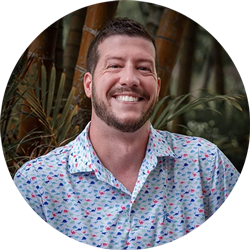
PATRICK CASALE: Hey, everyone. Welcome back to the All Things Private Practice podcast. I am joined today by a very good friend, repeat guest, Yunetta Spring Smith, who is a thriving therapreneur, I always get that word confused in my mouth, blending her expertise as a therapist and entrepreneur. She's the owner of Spring Forth Counseling, Ground Breakers Coaching and Consulting, and the founder of the first BIPOC EMDR therapy directory.
She is a licensed professional counselor, EMDR certified therapist, approved consultant, trainer, and international keynote speaker, specializing in supporting the healing of resilient children residing in adult bodies. Always love that line. Yunetta helps clients navigate intersections of historical neglect coupled with childhood, racial, and religious trauma.
She's passionate about the BIPOC and marginalized community. She emphasizes the importance of race, culture, and identity, and neurotype in her consultation training and overall therapeutic approach. Nationally recognized as a mental health media expert. She spreads awareness through the Talk it Out Tuesday, mental health segment on the Ricky Smiley Morning Show. And her upcoming rebranded podcast, Rewired from the Ground Up. And her self-published self-care workbook, Take The Struggle Out of Self-Care: Six Weeks to Create Your Self Care Strategy.
Yunetta is a groundbreaker, stigma breaker, and cycle breaker, who plants seeds of encouragement with every encounter. She strives to cultivate spaces where individuals can realize they are not broken, they are breaking through.
One, yeah, that was a lot for me to read. Two, it's well deserved. And how do you feel about, like, receiving that when you're hearing, “Oh, damn, I'm that person behind all of that.”
YUNETTA SPRING SMITH: I know. I think that last time we did this, you asked that question. And I was like… Each time it gets a little… And this time, I was like, “Yeah.”
PATRICK CASALE: I think you literally made that noise of…
YUNETTA SPRING SMITH: Like, I sure did afterwards. So, I was like [CROSSTALK 00:02:52]-
PATRICK CASALE: Yeah.
YUNETTA SPRING SMITH: …on the last time you read my bio, hearing what's a little bit different and what's evolved, and noticing that my body was relaxed while hearing it.
PATRICK CASALE: I like to hear that, for sure. I think it's well deserved. And I have spent a lot of time traveling the world with you, and hearing you speak and train. And one takeaway that I always have, and it's not just for myself and my experience, but people around me are always just so drawn to your messaging. But I also think it's the way that you make the messaging relatable and really affirming to different cultures, neurotypes, identities, taking that step back of being like we don't have to do trauma training from this black and white perspective. And there are so many factors to kind of look at and examine why we're doing this. And I just am internally grateful for everything you're putting into the world.
YUNETTA SPRING SMITH: Thank you, friend. I am eternally grateful for opportunities. And you know, the pushes, the nudges, the reminders that come.
PATRICK CASALE: The gut punches.
YUNETTA SPRING SMITH: The gut punches that we almost got banned for inciting violence on Facebook [INDISCERNIBLE 00:04:06]. So, if you all see like a GP behind a post, then that is a gut punch. We can't say gut punch online anymore. It will get-
PATRICK CASALE: No. You can say all sorts of fucked up shit, but you can't say I’m going to gut punch you.
YUNETTA SPRING SMITH: Make it make sense. Make it make sense.
PATRICK CASALE: Yeah.
YUNETTA SPRING SMITH: Yeah.
PATRICK CASALE: So, before we started recording, we were kind of talking about pivoting. And I know you have had a big opportunity that is coming to an end. And I also understand how it feels in a lot of ways to be like, I've had all these cool things happening, these experiences, and these opportunities fizzling out for a lot of reasons. And then, there's a point of like, introspection, but also can obviously lead to overwhelming anxiety, scarcity mindset, panic.
And you mentioned something, and I already forgot your great one liner, that when this stuff happens as entrepreneurs, we almost go back to recreating that environment where we become workaholics again, while we burn ourselves out to know, and because we are so fearful of like, how do I ensure that I continue to create, but also continue to pay the bills?
YUNETTA SPRING SMITH: Yeah, absolutely, yep, yep, yep, yep. Having these, you know, opportunities will work really hard. For opportunities, we do a lot of things to kind of get in the position that we're in. And I think sometimes we forget what it took to get us, kind of like, because I'm an, you know, EMDR, therapist and trainer, I look at things from that perspective oftentimes. Like, sometimes we can be so focused on the external results, but don't necessarily put as much energy on the internal part of what it took to produce that result, right? Like, that stays with you.
So, what we were talking about is kind of like me being mindful not to go back into restore factory settings. So, everybody, you know, when you got a phone, you got all your pictures, and your messages, and everything in your phone, right? But when you go to turn that phone in or get rid of it, you can't turn it in or shift to something else until you clear out the settings, because you don't want to send your stuff out there, right?
So, oftentimes, when we go back to like, when we have transitions, big transitions, big changes, big pivots, we can tend to go back to, like, restoring factory settings. Like, we go back to like the hustle, you know, or that survival mindset that got us to where we are. And it takes a lot of intentionality and mindfulness not to go back to old ways of doing things to survive when you're in that space of the unknown. So, that's kind of where I am and what I'm navigating, trying to do it a different way.
PATRICK CASALE: That's really well said. And I think about that a lot when something that feels like you've put a lot of yourself into, or the relationships you've built, the risks you've taken start to pay off, or to kind of see that compound and build, right?
Like, I remember being your friend when you were like, going through the process of trying to become a certified EMDR consultant and trainer, and how many speed bumps there were, and how many times you had to fall down and pick yourself up, and a lot of questioning of sense of self. And then, you make it to this, like, summit or this pinnacle, and you start having different opportunities come in the door that you've worked so hard for.
Simultaneously, though, oftentimes, I think, as entrepreneurs, especially neurodivergent ones, we are not paying attention to how much of us it has taken to get to that point. And we often leave those opportunities feeling unbelievably depleted. And then, when you have to start over again, you're almost trying to figure out, like, with what energy? Like, I have nothing left in the tank. And now, what comes next? Because capitalism, we do have to figure out ways to make money. And also, it can be really daunting in those experiences.
YUNETTA SPRING SMITH: Yeah, absolutely. Yeah, for sure, for sure. It's like, the effort and the energy that I use to get where I am, even the thought of going back to how I used to do things is not an option. It's not an option. So, it's like, how do I continue to, you know, be okay, rise, operate from this, you know, space of abundance? That's the word that's been coming up for me a lot is like flow and ease, like moving into things that may not necessarily be easy, but there's ease attached to it. And it's like me trying to force myself into spaces, or rooms, or doing that thing.
One thing I think about is, and this is something I probably had a conversation with a friend. I was like, man, sometimes there's grief that comes along with healing in terms of the, I got my healing shirt on, but in terms of, like, sometimes that wound that you are navigating really drives you to do some amazing things, right? Like, I don't care what people think about me as much as I used to. That drive to, like, really be super concerned with what people think, you know, just because of my personality, really pushed me to do a lot of things. Like, “Oh, you're saying I can't do it. Watch me do it.” You know?
So, now, it's like, okay, but it's like, you know, you still kind of want a little bit of that fire and that passion to push you to get things done. And that could be like, you know, ADHD thing too. Like, it's like that obstacle kind of drives you. So, finding that internal motivation that's not coming from a place of a wound, is that wisdom, and how do I move forward, or how do I pivot? It's a different energy.
PATRICK CASALE: That's really well said. That’s such an important point to like reflect upon, because I do think you've talked about this in speaking opportunities and engagements elsewhere. But like your wounds, your childhood wounds, your wounds as a human, they are often a part of your story in terms of your business ownership and your entrepreneurial journey. They have to be. And they are often driving forces, too. Either you're operating from like trauma reaction and you're like, I'm in survival mode, but that's making me go, go, go and create, create, create. And [CROSSTALK 00:11:17]-
YUNETTA SPRING SMITH: [CROSSTALK 00:11:17]-
PATRICK CASALE: Yeah. And the world, unfortunately, oftentimes rewards you for that. And it's like, “Oh, look how productive Yunetta is. And look how accomplished. Look at all these creations that she's had over the last couple of years.”
But in reality, operating from that nervous system that feels really dysregulated, and unsafe, and just trying to protect yourself at all costs. So, a little bit of healing, then you're starting to think about, like, okay, how do I motivate myself to continue to create or to do things that I want to accomplish in my career? And where is that coming from? Like, what place is that coming from for me? What's the motivating factor? I always think about, like, I watched the new Kevin Hart stand-up last night. He's talking a lot of shit about Michael Jordan. And I was thinking about Michael Jordan, how he used to make up stories and games to motivate him to play harder. And I was like [INDISCERNIBLE 00:12:10]. Yeah, I told myself, this player was talking shit about my family, and that player mentioned him in his life. Damn, once you get to this place of a little bit more healing, a little bit of regulation, you're kind of approaching creativity from a different perspective and a different facet.
YUNETTA SPRING SMITH: Yeah. And it's like, “Oh man.” If I'm thinking about somebody, like, talking shit about me. I'm like, “Oh man, I wonder what they're going through.” It's like, no, compare, be angry. But it's like, I can't help but see. I always play around and say, you know, the sixth sense, I see dead people. For me, like, I see nervous systems, right? Like, I'm seeing behind what I'm seeing. So, it's just a different energy, and it still can move. It's just being intentional about how things move now.
PATRICK CASALE: Yeah, yeah. Absolutely.
YUNETTA SPRING SMITH: [CROSSTALK 00:13:07] mindful that I'm doing and choosing things that are not just going to give me that quick survival boost, but something that's going to be sustainable, that makes sense, you know, that's not going to wear me out or have me back in the hospital, you know? That was like a [CROSSTALK 00:13:27]-
PATRICK CASALE: That was a wake-up call, for sure, right?
YUNETTA SPRING SMITH: A big wake-up call.
PATRICK CASALE: [CROSSTALK 00:13:32] screaming like, you’ve pushed me beyond my limits, paying attention to the red flags, and then you're just like, inevitably collapsing, and it’s fucking scary. And that's a really common theme and story for a lot of small business owners, is that story of, like, I have burnt myself out so badly, whether it's because you're trying to prove something to someone, or you're trying to heal a part of yourself, or because you get kind of addicted to the success and creation process, or you're chasing the dopamine. Like, your body inevitably collapses under the pressure of trying to sustain that, because it's not sustainable operating that way. And I think social media paints this picture that it is, which is not helpful.
And I think one thing that you mentioned about, I'm not going to chase the quick things anymore that are going to burn me out or deplete me. It's really hard sometimes for those of you who are ADHDers who need that dopamine hit. I am operating from a low dopamine system. And I'm seeking it at all costs. And that is so hard to then turn down those, like, quick wins, you know? Because it's really easy to do that and be like, “Oh, that felt really good. I can sustain for another couple of weeks or days.” And that's just not a reality that feels like there's long-term success there.
YUNETTA SPRING SMITH: Yeah, yeah, absolutely. Being able to sit in it for a minute before I make, did that run?
PATRICK CASALE: It didn't run. I was wondering if you did that on purpose, or if that just came out of your mouth.
YUNETTA SPRING SMITH: [INDISCERNIBLE 00:15:14] you know, being able to sit in it for a minute before you make that decision, you know? Something, you know, I've been doing. You know, sometimes, if it's like, you know, I want to do it, it's cool. But being able to zoom in and zoom out like, hey, what's this look like three months from now right now? But how's this going deplete? You know? What do you already have, you know, that you're responsible for?
I think it was in June, I can't even remember how many speaking engagements I had, but it was absolutely ridiculous. It was like back-to-back trainings, then it was like Scotland. Then it was like, before that, it was Spain. And it was like, all of this stuff had been pre-planned.
PATRICK CASALE: Africa.
YUNETTA SPRING SMITH: Yeah. But then, I had a whole bunch of opportunities pop up that were exciting, and I accepted all of them. And that transition period before September, and it was like, okay, after the next thing, I'm going to chill and sit down. After the next thing, I'm going to chill and sit down. And my body was like, “Okay, I got you.”
PATRICK CASALE: Yeah, yeah, same boat, same boat. Yeah. It's so hard when those opportunities pop up, and you're like, “Oh, that sounds exciting.” Or, “That does sound like something I want to do.” Especially, when your whole year has almost been pre-planned to be like now I have to start fitting things in, like, a game of like Tetris, but then your body certainly can say, like, we need to wave the white flag and you need to be still for a little bit.
And, you know, I talked about this on here a couple of weeks ago, ending up in the ER from, like, massive burnout, and just pushing myself so far beyond my limits that my body was just like, “Yeah, fuck this. I'm done. Your brain is not going to stop, so I'm going to stop you.” And that is not a fun place to be.
And before we started recording, you were talking about recreating the wheel, because I was mentioning, like, you should start really marketing neuro-affirming EMDR trainings and just trauma training in general, because the way you approach it is so much more neuro-inclusive than the norm. That means I have to recreate the wheel.
But in reality, you've already got the wheel. You're just like, maybe making some modifications. And I think that's the big difference when we're talking about like the evolution of entrepreneurialship is like you don't have to go recreate the wheel now with what you've got. You've already got this established foundation. Now, it's just about like making some edits, and some tweaks, and some revisions to better suit your passion and your need. And I think that's the difference between like, those of us, like ourselves, who maybe four or five years ago, we were definitely creating a lot of wheels. And it's cool where we've ended up. And I also think we paid a price for it, too.
YUNETTA SPRING SMITH: Absolutely, yeah, for sure, for sure. And now, like, as you were saying wheel, I was just thinking about, you know, what does a wheel do, right? It's moving. It's moving forward. It's constantly moving forward.
And it's one thing to be stuck, like with EMDR, we talk about when people are, like, looping, and they're stuck on the same like, “I feel this, I feel this, I feel this.” Right? We want folks to be moving, like, where they may circulate, but things are kind of moving forward, right? It's like recreating the wheel, it's like, you might be starting over with something, but you’re not necessarily starting from scratch, right? So, you're able to take, I can take things that I've learned over time and integrate it into what I have to make it something that’s going to help me to move forward.
Where we get stuck is when we say, oh, this work back then. Let me go do exactly what I did back then that worked when right now I'm in a different place. I have different responsibilities. I'm older. I have different things going on, so what I was able to do then to be okay, and if I try to do that now, it's not going to be okay.
PATRICK CASALE: No. And I think one other thing that I think about when you're talking about this, about like, back then versus now, you and I and a lot of people like ourselves probably were doing it all of ourselves, right? Like creating, editing, posting, content creation, putting ourselves into all of these opportunities. And I think fast forward to now, I think we both have hired support in certain areas too, because one thing that is about, like, not recreating a wheel, I don't want to go back and make similar mistakes that I've made in the past that took a lot of energy, financial resource, stress, depleted me unnecessarily. If I can avoid those pitfalls and kind of step around them or jump over them, knowing like this is what happens if you go back to what you were doing, it saves a lot of heartache, it saves a lot of aggravation, it saves a lot of overwhelm and stress. Allows you to focus more on like the here and now. And you can kind of start future casting, too.
YUNETTA SPRING SMITH: For sure, yeah, because every pit has a tip inside of it, right? There's a pit, P-I-T. You get a tip, reverse that, right? And you can get something, if you look at it and you learn from it, there's something that you can kind of adjust and tweak to move forward. So, being able to take those moments as information to inform your next decision, you know, is kind of [CROSSTALK 00:21:54]-
PATRICK CASALE: [CROSSTALK 00:21:54].
YUNETTA SPRING SMITH: …navigate.
PATRICK CASALE: All of your imagery, and metaphors, and all of these lines. You know this is exactly why you need to hire her, by the way, for those of you listening, and you're like, “I need trauma training, I need EMDR consulting.” This is what I'm talking about. Like, never blowing smoke about the quality of trainer and speaker that you are. And I just wish my brain worked like that sometimes. It feels so like slow inside most of the time.
But I've learned, like for myself, and this is important for those of you listening, like for me as an AuDHDer, I have wild energy spikes and wild energy crashes. There is no in between. I used to beat the shit out of myself for that. And like, think it was me that was just not following through or unable to do the thing.
And now, I'm like, when you have the energy, you do the thing, acknowledging that 90% of the other time it is not there. You are not going to force it. You are not going to be able to just manifest it out of nowhere. You have to, like, trust that intuitive and energetic process of like, I know this is like a roller coaster for me. And to start accepting that instead of fighting against that neurology. Because ultimately, when I'm fighting against it and resisting it, that's when I don't find myself in my window of like creativity, and flow, and genius. That's when I find myself panicked, feeling a lot of pressure, a lot of self-doubt, a lot of dread, making bad, impulsive choices, not seeing certain things, like bad business relationships and partnerships, like, because I'm so much operating in that dysregulated state in those times, trying to be like, got to force the creativity, got to get the flow back, got to figure out where that magic came from. And now just trusting that it really is like an ebb and flow type of wave process.
YUNETTA SPRING SMITH: Yeah, yeah. Why are you telling that story, right? Because, you know, my brain is like, it's [CROSSTALK 00:24:04]-
PATRICK CASALE: [CROSSTALK 00:24:04]-
YUNETTA SPRING SMITH: It’s like, oh, right. So, when you were talking about that, I was like, “Wow.” Like, you're riding the wave, right? Of those ebbs and flows, and not trying to force yourself, because it's going to come, right? And if it comes and you're beating yourself up for it, then you're going to get beat up by the wave and yourself, right? Which makes it worse.
We just came back from Costa Rica with Gabsters, and when we was out there, Gabrielle, we were out there because I can't swim, right? So, we are in the ocean, and the wave was coming, and my instant reaction to the wave was, right? I turned my back, but I don't know how big it is. I don't know how fast it's coming. My instant reaction is to turn my back to the wave.
So, being Gab, she said, “You never turn your back on the ocean. It's going to be out there surfing and shit. Never turn your back on the ocean.” So, every time the wave was coming, I wanted to. And I was like, “Okay, I'm not going to turn. Relax your body and don't turn your back on it.” And I was able to kind of ride it, you know?
And not one time I failed, and it was funny, but for the most part, I was able to just kind of ride it, or whatever. So, I thought about that as you were saying that, because when these big obstacles come, or these pivots and shifts come, sometimes we want to turn and run back to what we know, run back to that way of doing things that we did before. But if we don't turn our back to it, face it, because if we're facing it, then I can make a conscious, wise, informed decision about what's coming.
PATRICK CASALE: Yeah.
YUNETTA SPRING SMITH: You know? So, that was the visual when you were talking about that.
PATRICK CASALE: No, that's actually a great visual, it’s well said. Because I think when we find ourselves in these places of accomplishment and creation, and we have more time to sit with it, and to pick it apart, and appreciate more moments of it, too. At least I'm trying to. I can't say that that's factual for me, but I’m trying. I think it's important not to run back to the things that used to be able to serve you.
And I'll use the example of like I know with like, guarantee that I could go back to private practice coaching and courses, again, and doing all sorts of startup shit, and make money. And I fucking hate it. And I hate it so much. And it does not fill me up. It does not bring me joy. And if I'm going back to that, then I am in reactionary mode, right? I am turning away from the wave, and I am running for my life, and I am like trying to hold on to the things that I know that can keep me safe or at least secure.
But I think it also means that it's going to take an enormous amount of energy, because, if you're not passionate about it, it's going to take a hell of a lot more to get you, you know, through that moment. And I don't have that capacity anymore. And I have to be really mindful about how I allocate the energy that I have, because it feels so fleeting and so limited. And it feels like a very unique resource that I do not always get to access. And I just want to be so much more intentional about yeses and about where I'm going to put my energy in general.
And I know that can feel really scary, because opportunities come up, partnerships come up, money comes and goes, and it can create a lot of stress and uncertainty. And I think it's just important to, like, face it, like you're saying, and just really allow yourself to see all of it, instead of turning, and running, and just doing the one thing that feels familiar or somewhat comfortable.
YUNETTA SPRING SMITH: Yeah, for sure, for sure, because it's the difference between like survival and sustainability. And I think for me, as a black woman, I also have to leave room and space for the fact that it makes sense why I would be wired to go back to what is survival. Because the opportunities, or the abilities, or the access, you know, is limited, you know? In some spaces. So, you know, being able to acknowledge that and honor it.
And then, not shaming. This isn't like to shame anybody who chooses to go back to whatever it is that they're doing. Because even if you go back, you can go “back in with a different mindset.” You can go back and say, “Hey, I'm going to see this type of client.” You know, if you're in private practice. Or I'm going to do this, but then, I'm also going to make room for other things that was draining and depleting. So, it's just using that wisdom as you move forward to not just look at what's going to help you survive, but also, what's going to be sustainable.
PATRICK CASALE: Yep, absolutely well said. Very, very, very well said. Yeah, I'm thinking like, I also think about the luminal space and all this, the in between. A place I don't enjoy being.
YUNETTA SPRING SMITH: Not at all.
PATRICK CASALE: My neurotypes will collide here where ADHD right now in my system is quite restless, and autism has won the battle for once where it's like rest, and restoration, and sameness. And that's a place I really struggle with. So, I'm just like trying harder to just honor that, acknowledge it out loud like I struggle in this space. I'm going to be restless, I'm going to be uncomfortable. That's okay right now. And just really trying harder to just allow myself to be. And that always been very, very difficult.
YUNETTA SPRING SMITH: Yeah, yeah, that gray area.
PATRICK CASALE: Mm-hmm (affirmative). Not my favorite color, not my favorite place to be.
YUNETTA SPRING SMITH: Yeah, my autistic clients, you know, like, “What's the gray? Let's find the gray. What does gray look like?” And it's like, “Oh, fuck the gray.” And I'm like, I know, but what is it? Let's just even look at what does the gray look like, you know? And how can I be stable and secure enough, knowing that it may not be, it's not ideal, not regulated, but just regulated enough in the gray what does that look like? But it is a difficult place to be. I don't like it either.
PATRICK CASALE: Yeah. And I hope for both of our sakes that, you know, in a couple of months to a year, we're both sitting here thinking about this moment of like introspection, what comes next? Is it a wave? And really not trying to run from it, and just trusting that everything in our personal lives has brought us to these moments. And we've worked really fucking hard. And now things will continue to unfold the way that they're supposed to for us.
YUNETTA SPRING SMITH: Yeah, absolutely. I look forward to that. [CROSSTALK 00:31:31].
PATRICK CASALE: As we get ready to wrap, what do you have coming up? And where can people find it? And we will have this in the show notes for all of you, too, so that you have access to everything Yunetta says or lists.
YUNETTA SPRING SMITH: What I got coming up. So, first up is the cruise that's coming up, January, 3rd through the 10th, going out of Puerto Rico with lovely Jennifer Agee. We're doing Healing Childhood Invisible Wounds. So, that's going to be fun. I'm super excited about that. I think we have, like, one spot left for South Africa in February, which is always a lovely, lovely experience. It's just like an experience. Love South Africa. This will be our third year going.
And then, I don't know if Shaelene got spots left for Disney. She might have opened up a few. So, we can't get Patrick to agree to come.
PATRICK CASALE: Yeah, it's not happening.
YUNETTA SPRING SMITH: It's not happening. Absolutely not happening. But you know, did you put yours on? Or you put the thing on your shoulder? [CROSSTALK 00:32:36].
PATRICK CASALE: [CROSSTALK 00:32:36].
YUNETTA SPRING SMITH: But that's about as good as it's going to get.
PATRICK CASALE: That’s about as good this is going to get.
YUNETTA SPRING SMITH: But that's in February. Yeah, outside of that, I do get my advanced trainings coming up. So, that will be coming up, so that'll be on my Ground Breaker site. And then, my basic trainings. I got my virtual trainings out for the whole year, so if you need a basic training or a refresher, so if you got training EMDR, before you need to refresh. I'm encouraging people to do that, because it's a different experience, you know? And then, consultations. So, if you want that continued consultations, I'm opening up my consultation and my CIT consultations next year.
PATRICK CASALE: Great. I'll have everything that you Yunetta just listed. So, if you want to get EMDR trained, if you want to continue your advanced training, if you want to consult, if you need that support and guidance, that will all be in the show notes as well as Yunetta’s cruise from Puerto Rico to Aruba and everywhere else that she's going to be.
She's also speaking at the Doubt Yourself, Do it Anyway summit in Portland, Maine, September 1st to the 3rd. Come check that summit out with one of the worst summit host trip advisors ever had, and first time just making fun of myself like that. Some people are like, “Yeah.” So, anyway, September 1st to the 3rd in Portland, Maine, 13 speakers, nine CEs, doubt yourself, do it anyway. And we will see you next week.
FREE PRIVATE PRACTICE GUIDE
Join the weekly newsletter for private practice tips, podcast updates, special offers, & your free private practice startup guide!
We will not spam you or share your information. You can unsubscribe at any time.





![Episode 264: Creating Through the Chaos of a Neurodivergent Life [featuring Bre "BR3"]](https://kajabi-storefronts-production.kajabi-cdn.com/kajabi-storefronts-production/file-uploads/sites/2147507511/images/a14004-cc3d-8aba-5fb8-2442fdfc650_TNDE_YouTube_episode_264.jpg)
![Episode 263: Your Symptoms Are Real—Even When Medicine Doesn’t Have The Answers [featuring Dr. Zachary Spiritos]](https://kajabi-storefronts-production.kajabi-cdn.com/kajabi-storefronts-production/file-uploads/sites/2147507511/images/84bc15-1ce4-1a0b-8f85-f5812bce75_TNDE_YouTube_episode_263.jpg)
![Episode 262: Your Brain Isn’t the Problem. The System Needs Reimagining. [featuring Dr. Mel Houser]](https://kajabi-storefronts-production.kajabi-cdn.com/kajabi-storefronts-production/file-uploads/sites/2147507511/images/42c858d-0b15-7581-e6ac-f636e7a1fa1_TNDE_YouTube_episode_262.jpg)
![Episode 261: Dragons, Dopamine, and Autistic Special Interests [featuring Mandi Dixon]](https://kajabi-storefronts-production.kajabi-cdn.com/kajabi-storefronts-production/file-uploads/sites/2147507511/images/25ae562-4a0a-44e-04f6-4caeaa5c8bd_TNDE_YouTube_episode_261_new_.jpg)